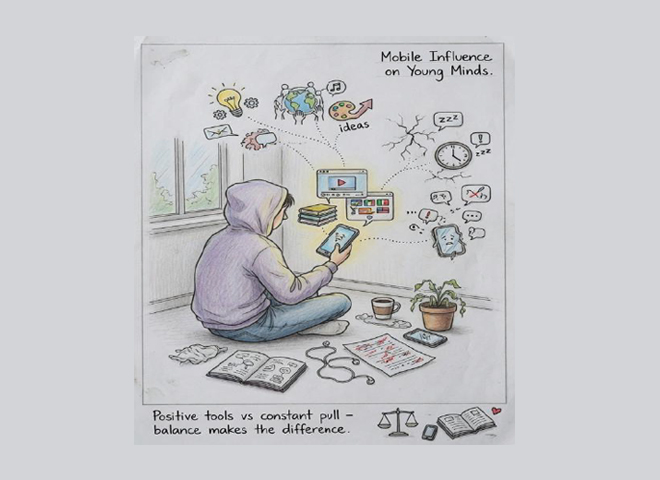
The rapid expansion of mobile technology has transformed human interaction, education, communication, and lifestyle patterns across the globe. Young adults, particularly those aged between 19 and 22 years, represent one of the most active user groups of smartphones. Mobile devices provide unprecedented access to information, social connectivity, digital learning platforms, entertainment, and career opportunities. However, alongside these benefits arise concerns regarding mental health, reduced attention span, dependency, and social behavior changes.
This article explores how mobile technology influences young minds from psychological, educational, and social perspectives. Using analytical review methods supported by existing research observations and behavioral patterns among students, the study examines both positive and negative impacts. Findings suggest that mobile devices act as powerful tools shaping identity, learning habits, and emotional development. When used responsibly, mobile technology enhances creativity, collaboration, and academic success. Conversely, excessive or unregulated usage may lead to distraction, anxiety, and reduced real-world engagement.
The article concludes that mobile phones themselves are not harmful; rather, outcomes depend on user awareness, digital discipline, and purposeful engagement. Encouraging balanced usage, digital literacy, and mindful technology habits can transform mobile devices into instruments of growth rather than sources of dependency.