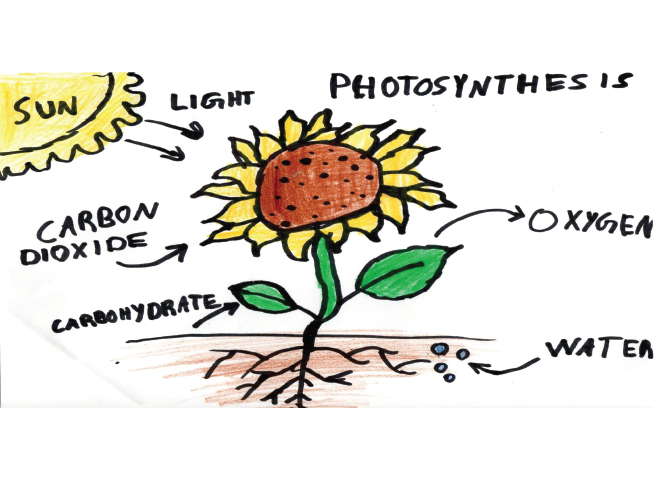
Photosynthesis happens mainly in the leaves of plants, where a green pigment called chlorophyll absorbs sunlight. The plant then uses this energy to turn carbon dioxide from the air and water from the soil into glucose, which is a type of sugar. This sugar gives the plant energy to grow.
Scientists also learned that plants can adjust how fast they do photosynthesis depending on how much sunlight they get. For example, on very sunny days, plants can work faster, while on cloudy days, the process slows down. This shows that plants are smarter and more adaptable than we might think. Another important part of photosynthesis is that it produces oxygen as a byproduct. This oxygen is released into the air and is essential for humans and animals to breathe. Without photosynthesis, life on Earth would not be able to survive.